Who can call themselves an architect in the UK, and what that means for naming a design practice
The direct answer
In the UK the title architect is protected under the Architects Act 1997 and may be used in business or practice only by someone on the Architects Register kept by the Architects Registration Board (ARB). Anyone may lawfully provide architectural services; the restriction is on the word. Terms such as architectural consultant, architectural designer and architectural assistant are unprotected, and the Act exempts landscape architect, naval architect and golf course architect. Interior architect, student architect and Part 2 architect are unlawful for unregistered people, and registration abroad gives no right to the title in the UK. A practice may use architect in its business name when a registered architect has control and management of the architectural work and supervises those who are unregistered. ARB says the rule applies to all digital content used to promote a business, including website text, social media bios and metadata, and it prosecutes misuse.
Five conclusions
The argument, compressed.
- Architect is protected by law in business or practice. Only people on the Architects Register may use it.
- Providing architectural services is open to anyone; the law restricts the word, never the work.
- Architectural designer, architectural consultant and architectural assistant are unprotected and lawful.
- A practice may use architect in its name when a registered architect controls and manages the architectural work.
- The rule covers websites, social media bios and metadata used to promote a business. ARB prosecutes misuse.
Working framework · 5 decisions
The title line check
Five checks for a design practice before the name goes on the door and into the page title.
Decision 01 / 05
Register
Confirm who in the practice is on the Architects Register. Everyone else uses an unprotected description.
The word is protected; the work is open
ARB states it plainly: the title architect is protected by law in the UK and can only be used by someone on the Architects Register. It adds that anyone, architect or otherwise, can legally provide architectural services. The protection applies to the word, used in business or practice. Anyone may call themselves an architect in a social context.
The practical consequence is a split market. Registered architects own a word that clients search for and trust. Unregistered designers do the same kind of work under descriptions that carry less recognition, which is why the naming decision matters so much to them.
The short version
Registered: use the word, and make the register entry easy to find. Unregistered: build the brand on a description you may lawfully use.
What an unregistered practice may say
ARB confirms that the protection applies to the word architect alone, so architectural consultant and architectural assistant sit outside it, and architectural designer is widely used on the same basis. The Architects Act exempts three professions: landscape architect, naval architect and golf course architect. ARB's FAQ says any other use is unlawful.
Several tempting variants fail. Interior architect is unlawful for someone without ARB approved qualifications. Student architect and Part 2 architect are out; the law recognises only full registration, and architectural student is the permitted description before training is complete. Registration in another country, even stated openly, gives no right to the title in the UK.
- Lawful for anyone: architectural designer, architectural consultant, architectural assistant, design studio.
- Exempt by statute: landscape architect, naval architect, golf course architect.
- Unlawful without registration: architect, interior architect, student architect, Part 2 architect.
Practice names, websites and metadata
A practice can use the word architect in the course of its business if it has a registered architect in control and management of the architectural work, and that architect must be able to show sufficient control and proper supervision of those who are unregistered. A firm named around a registered founder needs a plan for the day that person leaves.
ARB extends the rule to digital content used to promote a business: text on social media accounts, the website, and any metadata. A page title or a profile bio that says architect counts. ARB maintains a table of prosecutions and invites the public to report misuse online, so the exposure is real rather than theoretical.
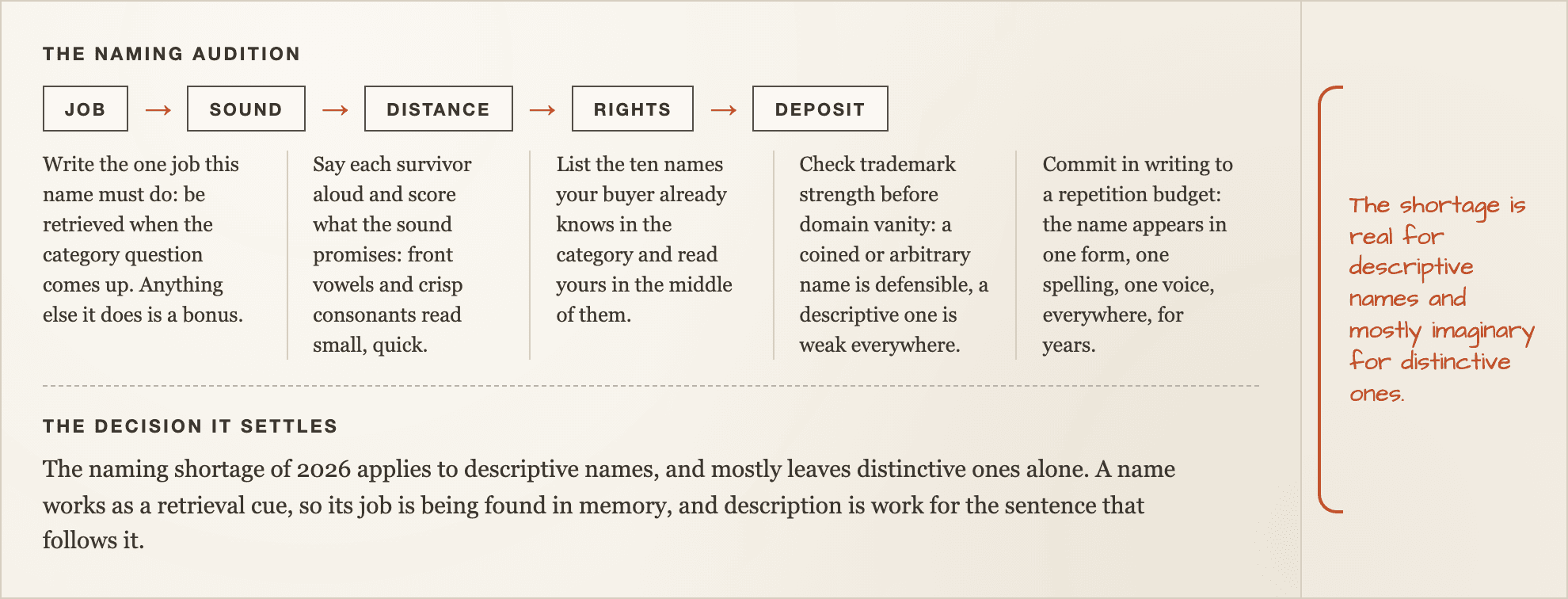
The brand decision underneath the legal one
For a registered practice the word is a credential, and the brand should make it verifiable: a link to the register entry on the team page does more than a logo. For an unregistered studio the absence of the word is a positioning problem, and the answer is specificity. Architectural designers for listed building owners, or for garden rooms, or for small hospitality fit outs, is a sentence a client can repeat; design studio is a category.
Either way, the title is the floor. Clients choose between practices that all clear it on the strength of what each one is known for.
Before you use it
Questions that can change the recommendation.
Is architect a protected title in the UK?
Yes. Under the Architects Act 1997 the title architect may be used in business or practice only by someone on the Architects Register held by ARB. Anyone may still provide architectural services; the law protects the word rather than the work.
Can I call myself an architectural designer without being registered?
Yes. ARB confirms that the protection applies only to architect, so architectural consultant, architectural assistant and similar descriptions are open to anyone. Interior architect, student architect and Part 2 architect are unlawful without registration.
Can a company use architects in its name?
Yes, when a registered architect has control and management of the architectural work carried out and can demonstrate proper supervision of those who are unregistered.
Does the title rule apply to social media and websites?
Yes. ARB says that where social media or a website promotes a business or practice, the restriction applies to all digital content, including profile text and metadata. Purely social use is outside it.
What does brand strategy cost for a UK design practice?
At Branding Tatva the Foundation engagement starts at £1,950 for UK clients. Its published scope includes discovery and positioning, audience definition, a core visual identity, starter brand guidelines and launch messaging direction. Confirming who may use a protected title is a matter for ARB and sits outside the scope.
Research record
What this guide draws from.
Each source note describes what the reference supports. Platform guidance, research findings and Branding Tatva's practical suggestions have different scopes.
- Who can use the title architect
Architects Registration Board
The title is protected by law; architectural consultant and architectural assistant are outside the protection; anyone may provide architectural services.
- Using the title architect and whether to stay on the Register: frequently asked questions
Architects Registration Board
Exempt professions, interior and student architect, practice names, overseas registration, and digital content including metadata.