Branding on a budget: what a small service business should pay for first
The direct answer
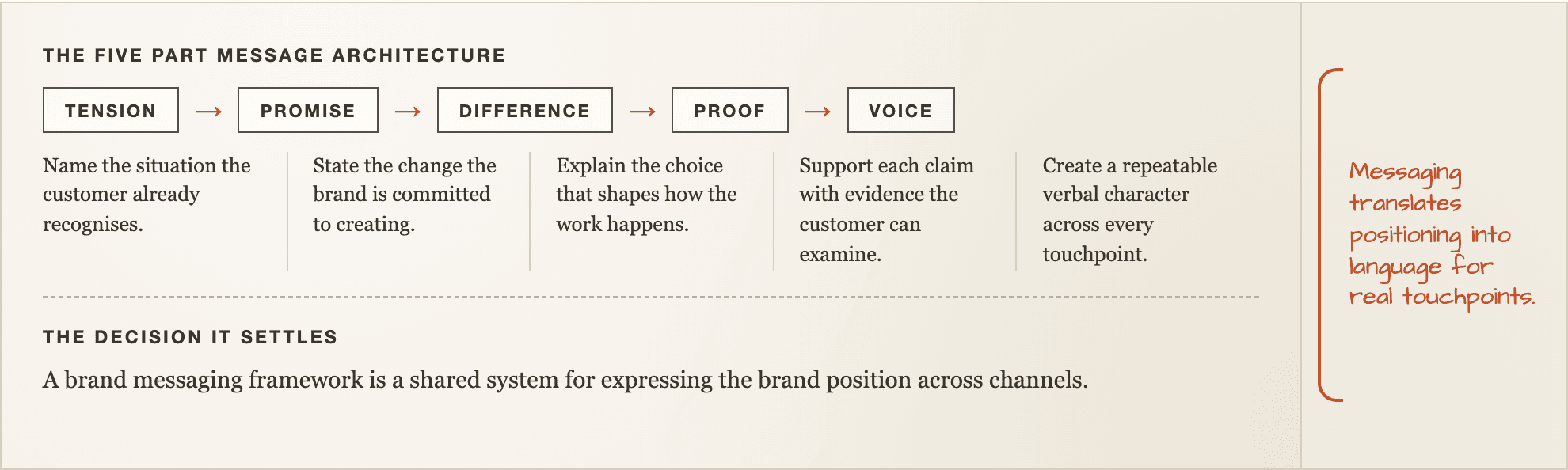
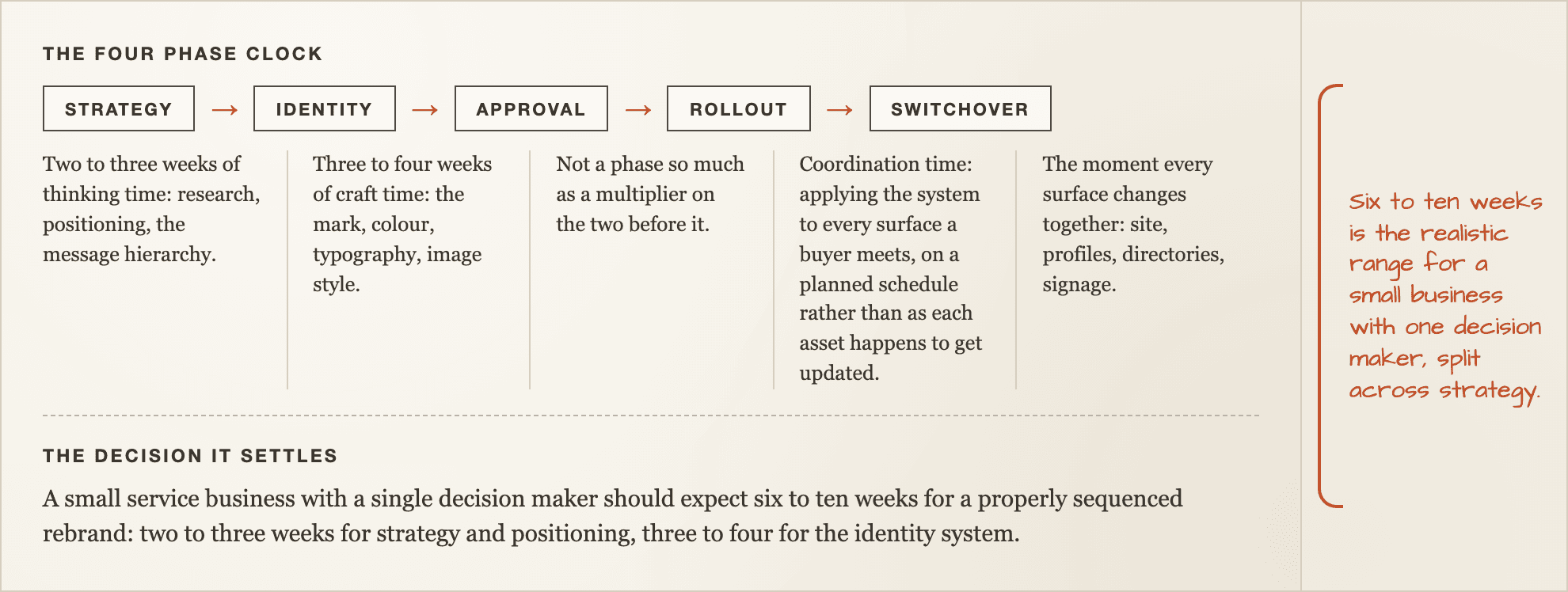
On a small budget, spend on the decisions before the decoration. The order that returns the most is: first, positioning, the sentence that says who you are for and what you are chosen over, which you can often write yourself and which makes every later choice cheaper. Second, a plain but consistent identity, one competent logo, one colour, one typeface, applied the same way everywhere. Third, the surfaces buyers actually meet, usually the website's first screen and your most used profile. What to delay: a large identity system, a full campaign, and anything bespoke that a clear position would make obvious later. A modest budget spent on deciding beats a large one spent on a striking identity that expresses no particular position.
Five conclusions
The argument, compressed.
- Spend on decisions before decoration. Positioning is the cheapest thing to get right and the most expensive thing to get wrong.
- A plain identity applied consistently beats a striking identity applied loosely. Recognition comes from repetition, which is free once the rules exist.
- Concentrate the money on the few surfaces buyers actually meet, rather than spreading it thin across everything at once.
- Delay the large identity system and the campaign. Both become cheaper and more obvious once the position is settled.
- The most common budget waste is a handsome logo bought before anyone decided what it should express. Avoiding that single mistake funds most of the rest.
Working framework · 4 decisions
The spending order that returns the most
Each step makes the one after it cheaper, which is the whole argument for the sequence. Spend out of order and the later money buys guesses.
Decision 01 / 04
Positioning first
The one sentence: who you are for, what you are chosen over. Often written by the founder, and the most decisive choice in branding.
A small budget is a clarifying gift
When money is short, you cannot afford to buy the parts of branding that merely look expensive, which forces you to buy the parts that actually work. That is a gift disguised as a constraint.
A large budget lets a business skip the thinking and spend straight into a striking identity, then wonder why recognition stays flat. A small budget makes you decide first, and deciding first is what most large budgets should have done and skipped. The order below is the one a limited budget forces and every budget should follow.
Buy the decision first, because it is nearly free and governs everything
The single highest return spend in branding is the cheapest: settling your position. Written as one honest sentence, who you are for and what you are chosen over, it costs little more than the discomfort of choosing, and it makes every later decision obvious.
A designer briefed with a clear position produces sharper work in less time. A website written from a clear position needs fewer words. Content with a clear position repeats one idea instead of chasing ten. You can often write this sentence yourself, and if you pay for anything at this stage, pay for help writing it, rather than for a logo that would only express it by luck.
The cheapest mistake to avoid
A logo bought before the position is decided is the most common waste in small business branding. The mark looks fine and expresses nothing in particular, and it gets redrawn the moment the position is finally named.
A plain identity, applied the same way, beats a fancy one applied loosely
Recognition is built by repetition, and repetition costs nothing once the rules exist. This is why a small business is better served by one competent logo, one colour, and one typeface, used identically everywhere, than by an elaborate identity applied inconsistently because there was never a budget to govern it.
Pick a distinctive, flexible mark once, choose a colour you can own, set a typeface, and then spend your effort, rather than your money, on using them the same way on every surface for a long time. The discipline of consistency is where a modest identity quietly turns into a recognisable brand.
Concentrate the money where buyers actually are
A thin budget spread across every possible surface accomplishes nothing everywhere. Concentrated on the few places buyers actually meet you, it accomplishes something real.
For most small service businesses those places are the website's first screen, where a stranger decides in seconds whether you are for them, and the one profile you are most active on. Make those clear, aligned with your position, and consistent with each other, and leave the packaging, the secondary channels, and the brand film for a later budget. Depth on the surfaces that convert beats a shallow presence on all of them.
What to delay without guilt
A few things feel urgent and are safe to postpone. The full identity system, the one with the patterns, the icon set, the motion, waits until you have a position worth systematising and the money to do it once. The campaign waits until the brand underneath it is clear, because a campaign on an unclear brand introduces the business from scratch every time and compounds nothing.
Bespoke anything waits, because a settled position tends to make the bespoke choice obvious and cheaper later. Delaying these is discipline, rather than a compromise, and the businesses that delay them well are usually the ones whose small budgets end up looking expensive.
- Postpone the full identity system until there is a position worth systematising.
- Postpone the campaign until the brand underneath it explains itself.
- Postpone anything bespoke, since a settled position usually makes the bespoke choice obvious and cheaper.
Before you use it
Questions that can change the recommendation.
What is the most important thing to spend on with a small branding budget?
The decision, rather than the design. Settling your positioning, the one sentence naming who you are for and what you are chosen over, is the cheapest thing to get right and the thing that makes every later spend more efficient. If you buy help at all when money is tight, buy help writing that sentence before you buy a logo.
Can I build a good brand cheaply?
Yes, if you spend in the right order. A clear position you wrote yourself, a plain but consistent identity, and depth on the two or three surfaces buyers actually meet will outperform a large budget spent on a striking identity with no decision behind it. Cheap branding fails when it buys decoration first; it succeeds when it buys decisions first.
Should I get a logo or a strategy first on a tight budget?
Strategy, every time, and it is usually the cheaper of the two. A logo is a decision made visible, so the decision has to exist first or the logo is a guess that gets redrawn. Write the position, then commission or design a simple mark against it. The order protects the little money you have.
When should I invest more in branding?
Once the position is settled and beginning to pay for itself: buyers arrive already understanding what you do, your content repeats one idea, and consistency is building recognition. That is the moment a fuller identity system and a campaign stop being premature and start compounding what the position built. Investing before that point tends to fund decoration; investing after it funds growth.