What brand strategy costs in Canada, and why the figure is published
The direct answer
Branding Tatva publishes three starting prices in Canadian dollars: a Foundation engagement from $3,200, a Full Brand System from $7,500, and an ongoing Brand Partnership from $1,900 a month. The figures are starting points rather than quotations, because scope decides the final fee, and the proposal confirms it after the first conversation. One Canadian rule makes publishing them a commitment rather than a marketing line: under section 74.05 of the Competition Act, advertising a product at a price and then supplying it at a higher price is reviewable conduct. A published starting price is therefore a floor the practice holds, which is why it states what moves the number instead of leaving the figure vague.
Five conclusions
The argument, compressed.
- A Foundation engagement starts at $3,200, a Full Brand System at $7,500, and a Brand Partnership at $1,900 a month, all in Canadian dollars.
- The published figure is a floor rather than a quotation, because scope decides the final fee.
- Under section 74.05 of the Competition Act, advertising a price and then supplying higher is reviewable conduct, so a published starting price is a commitment.
- Canadian scope drivers are bilingual requirements, provincial professional rules and the number of locations the work has to hold across.
- Legal clearance of a name stays with a Canadian trademark agent, and the fee covers the brand work rather than the filing.
Working framework · 4 decisions
What decides a Canadian quote
Four inputs move the fee, and everything else is packaging.
Decision 01 / 04
How many languages the work has to hold
A brand that has to work in English and French needs the verbal system built twice and tested once, which is a different job from a single language engagement.
The three tiers
A Foundation engagement begins at $3,200 and settles the decisions that everything else depends on: who the work is for, what the practice is being chosen over, and the one idea the identity and the language both carry.
A Full Brand System begins at $7,500 and adds the build: the visual identity in use, a messaging framework with written examples, and the specification someone else can apply without asking.
A Brand Partnership begins at $1,900 a month and keeps the system current, which matters most for practices whose offer or regulation changes within the year.
The advertised price rule
Canadian law treats a price claim as a commitment in a way that is worth understanding before a practice publishes a range. Section 74.05 of the Competition Act makes it reviewable conduct to advertise a product for sale in a market and then, during the period and in the market the advertisement relates to, supply it at a higher price.
The practical consequence for a service business is narrow and clear: a published starting price has to be one the business will actually honour for the scope it describes. Publishing a low figure to start conversations and quoting higher once the conversation is underway is exactly the pattern the provision addresses.
That is why the figures here are published with the scope beside them and the drivers named underneath. A starting price a reader can test against their own situation is more useful than a range that appears to cover everything.
The commitment test
Before publishing a starting price, read it as a promise to the next enquiry. If the business would rather negotiate from it, the scope beside it is doing the real work and the figure is describing nothing.
What sits outside the fee
Three things sit outside the brand work and stay with the people qualified to do them. Trademark clearance and filing belong to a Canadian trademark agent or lawyer. Regulatory approval of a claim belongs to the regulator. Website development and media production are separate engagements with separate budgets.
Being specific about the boundary protects the fee from absorbing work it was never sized for, and it tells a practice what to budget beside the engagement rather than after it.
Comparing two proposals
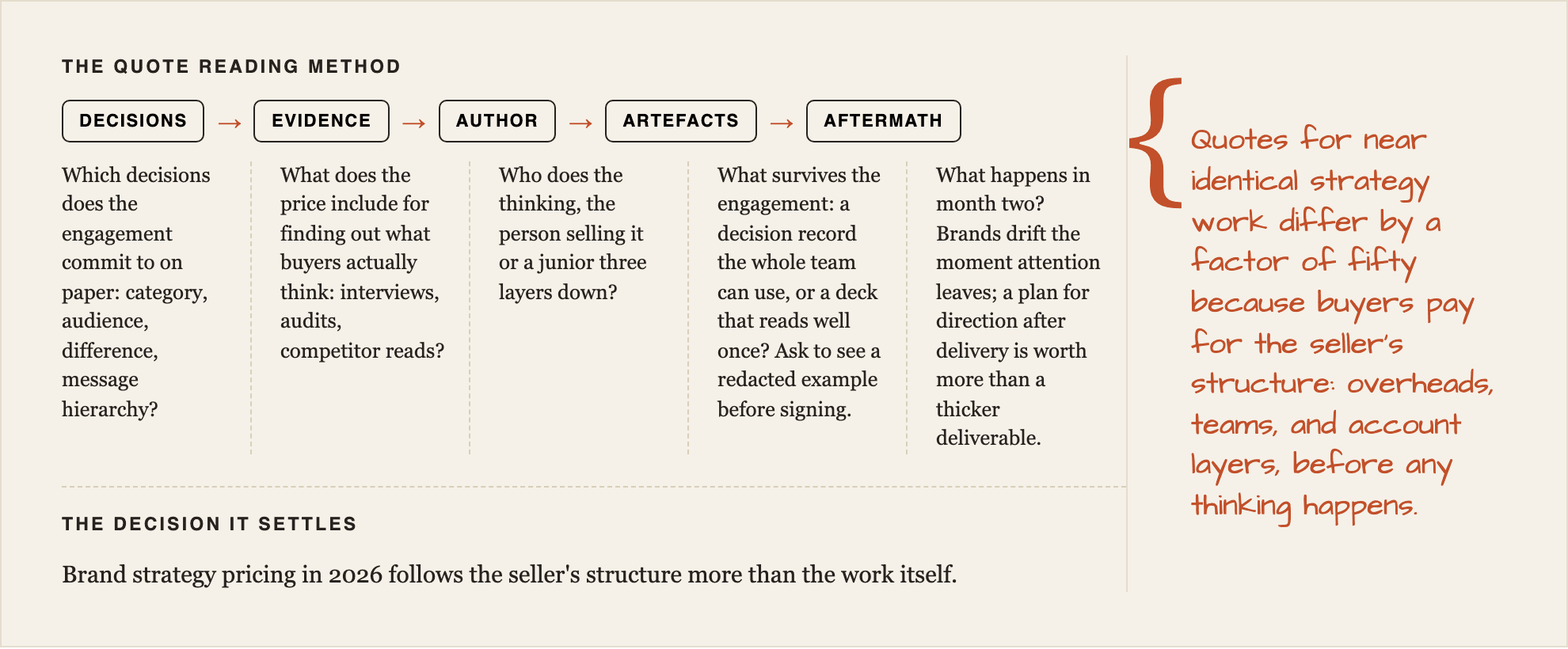
Two Canadian proposals at the same price are rarely the same job. Compare what each one delivers at the end: a document, a system someone else can apply, or a conversation. Compare who does the work, because a fee that pays for a senior name and delivers a junior one is the most common gap in this market.
Then compare what each proposal assumes the practice will supply. The cheapest proposal often carries the largest hidden cost, which arrives in the hours somebody on the team spends translating the deliverable into something usable.
Before you use it
Questions that can change the recommendation.
How much does brand strategy cost in Canada?
Branding Tatva publishes three starting prices in Canadian dollars: a Foundation engagement from $3,200, a Full Brand System from $7,500, and an ongoing Brand Partnership from $1,900 a month. Scope decides the final fee, and the proposal confirms it after the first conversation.
Are these fixed prices?
They are starting prices for the scope described beside them. A practice with several locations, two languages or a regulated claim carries more work than a single location one, and the proposal sets the final figure.
Why publish a price instead of asking people to enquire?
Section 74.05 of the Competition Act makes it reviewable conduct to advertise a price and then supply the product higher, so a published starting price is a commitment the business has to hold. An enquiry only page avoids the commitment and leaves the reader with nothing to judge.
Does the fee cover trademark clearance or regulatory approval?
No. Trademark clearance and filing belong to a Canadian trademark agent or lawyer, and approval of a regulated claim belongs to the regulator. The fee covers the brand work, and the boundary is stated in the proposal.
Research record
What this guide draws from.
Each source note describes what the reference supports. Platform guidance, research findings and Branding Tatva's practical suggestions have different scopes.
- Competition Act, section 74.05, sale above advertised price
Government of Canada, Justice Laws
The provision making it reviewable conduct to advertise a product at a price and then supply it higher in the market and period the advertisement relates to. Read on 8 October 2026.
- Deceptive marketing practices
Competition Bureau Canada
The Bureau's own account of the reviewable conduct provisions.